Cohere's North Mini Code: A 3B Active Parameter Open-Source Model for Cost-Optimized Coding
Benchmark analysis shows this small Apache 2.0 model can outperform larger models on coding tasks, offering a potential cost-saving alternative for specific workflows.
Practical Summary
Cohere has released North Mini Code, an open-weights model with only 3B active parameters, optimized for coding. Benchmarks show it can outperform some larger models on coding intelligence and speed, making it a candidate for cost reduction in specialized coding tasks where full-scale models are unnecessary.
Why It Matters
For teams optimizing AI tool costs, smaller active parameter models can significantly reduce API spend or self-hosting compute costs. This model provides a concrete, benchmarked alternative to evaluate for coding-specific applications, potentially replacing larger, more expensive models without sacrificing necessary performance.
Understanding the Model's Cost Optimization Profile
The North Mini Code model is designed with a 30B total parameter count but only 3B active parameters. This sparse activation means it requires significantly less computational power per inference call than dense models of similar total size, directly impacting API cost or self-hosting hardware requirements.
Benchmark Performance vs. Larger Models
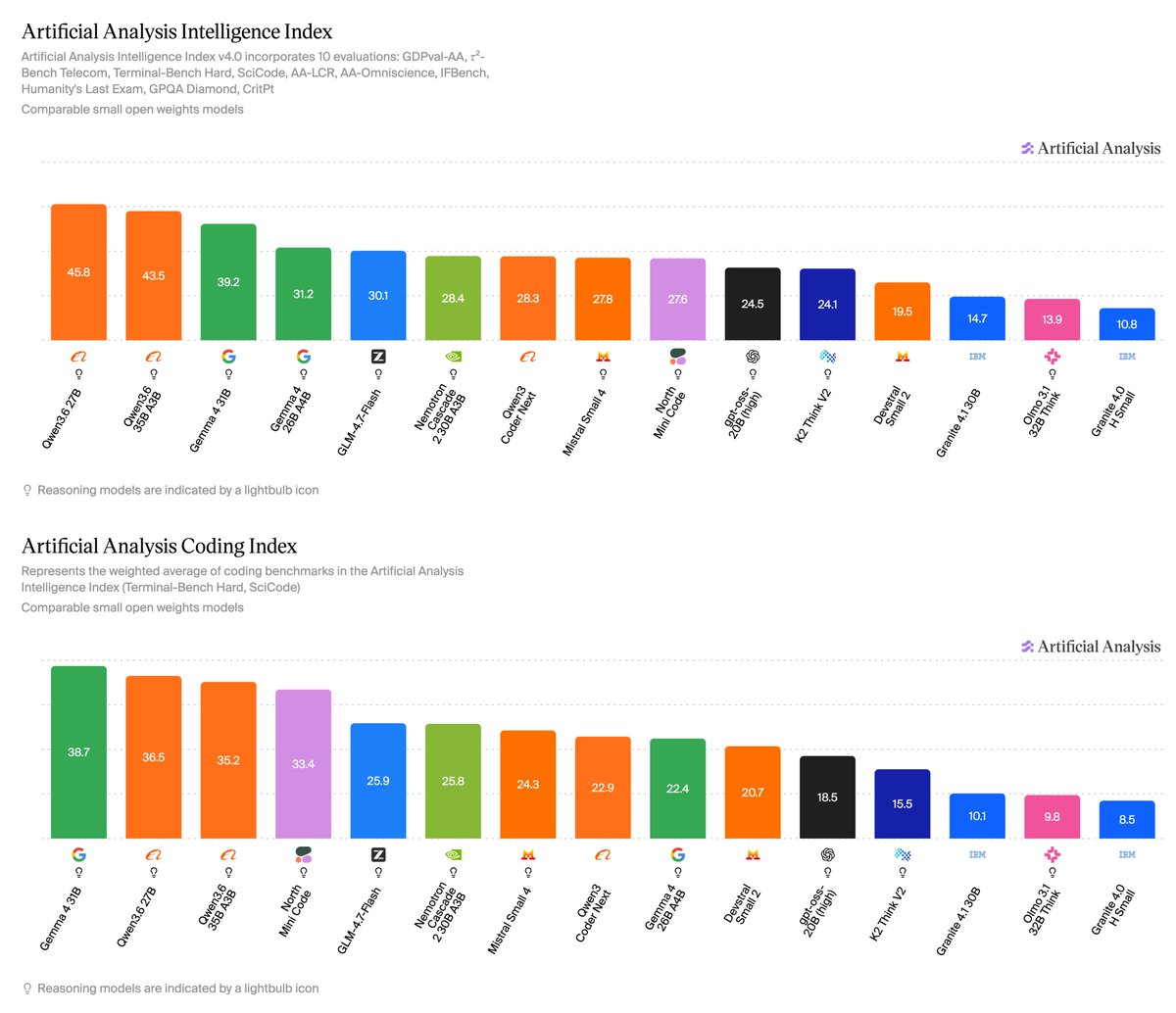
According to the Artificial Analysis benchmarks, it scores 27.6 on the Intelligence Index, which is above the 24.5 scored by the larger gpt-oss-20B (high) and very close to the 27.8 scored by Mistral Small 4 (119B total, 6.5B active). This suggests that for general intelligence tasks, this smaller model can match or exceed the performance of some larger alternatives.
For its primary use case—coding—it scores 33.4 on the Coding Index. While below the Qwen3.6 35B A3B (35.2), it significantly outperforms models like GLM-4.7-Flash (25.9). This positions it as a strong, cost-effective option for coding assistants or code generation workflows.
Speed and Licensing Considerations
The report notes that on Cohere's API, the model achieves approximately 199 output tokens per second, which is faster than several comparable models in its size and intelligence class. High throughput can reduce costs in batch processing or latency-sensitive applications. Furthermore, its Apache 2.0 license allows for commercial use and modification, offering flexibility for self-hosting and custom optimizations to further control costs.